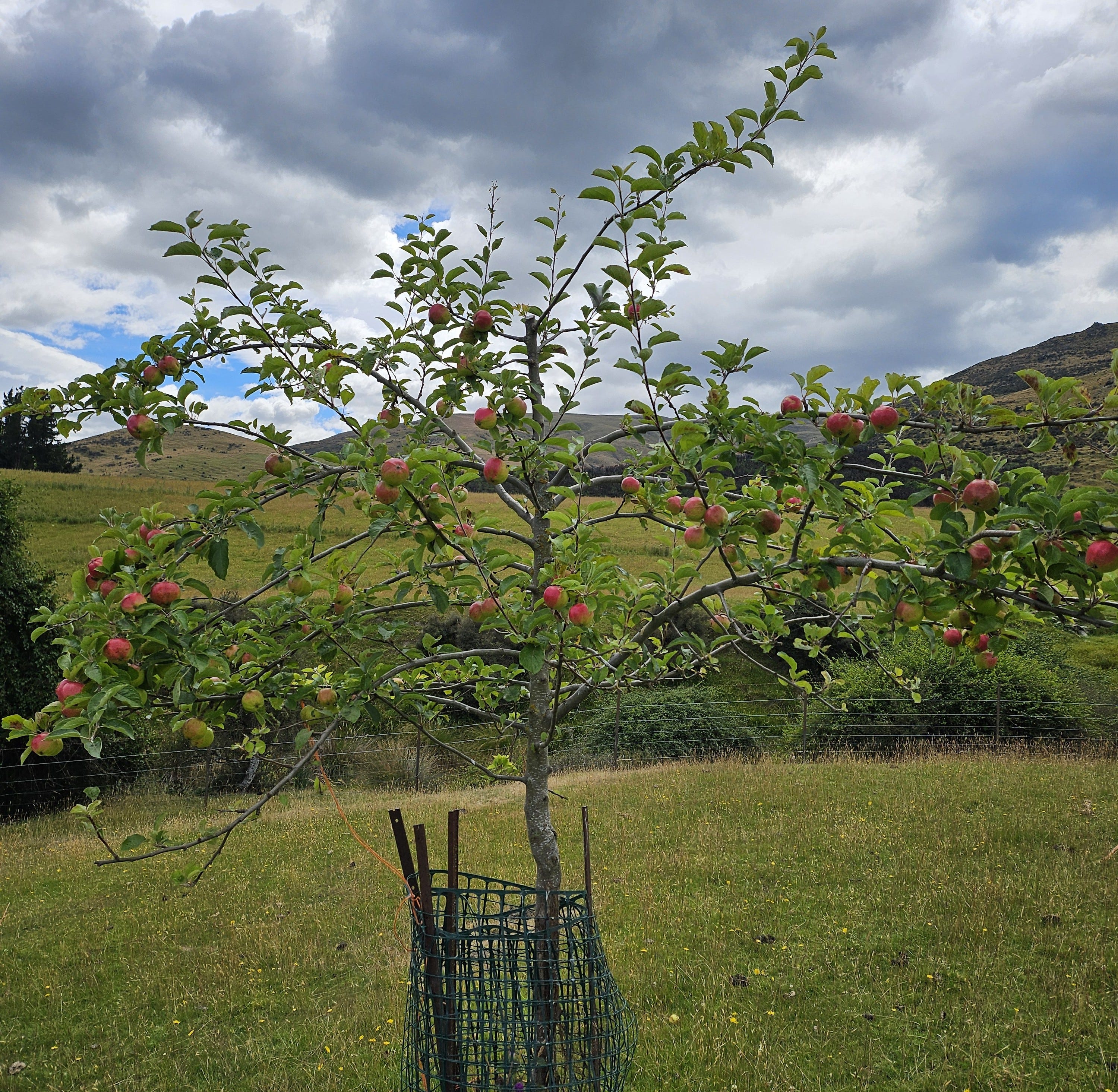
There’s nothing quite like crunchy, crisp apples straight from the tree. But if you ask your great-granny about her youth, I guarantee she’ll say, “Apples tasted better back then.”
And it’s true!
Since the 20th century we’ve let many old varieties of fruit and vegetables slip quietly into oblivion — and with them have gone taste… aroma...and diversity. Count up how many different apple names you can see on the supermarket shelves. You might see six, but years ago there would have been dozens throughout the country.
It’s both sad and dangerous for the environment that we’ve lost so much plant diversity in the last hundred years. That’s why we treasure the oldest tree on our farm.
Mystery
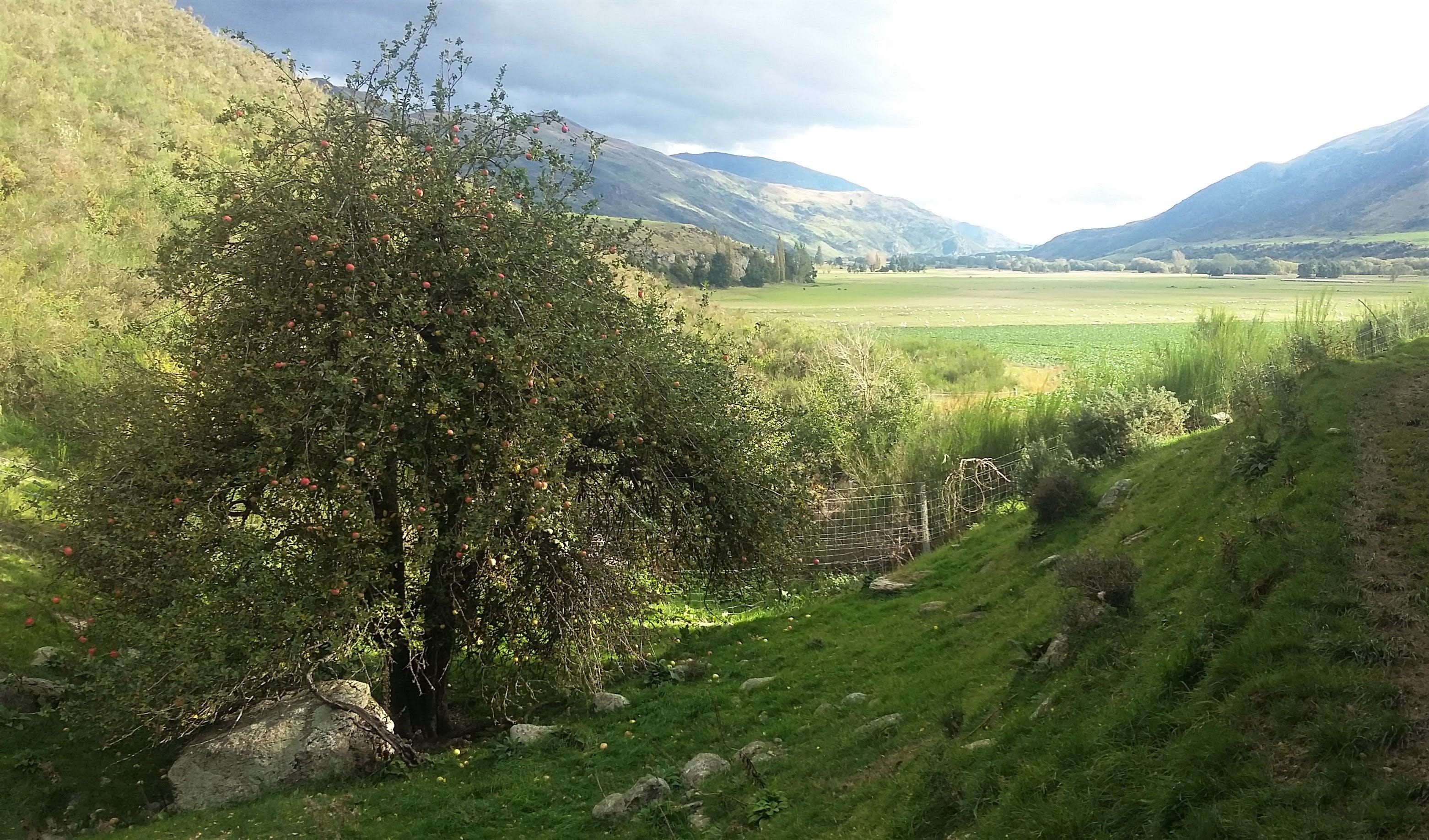
In a quiet gully, far from prying eyes, stands an old apple tree.
Why is she there, far from the houses and sheds on the farm?
The now-dry creek used to wash down through the paddocks and home orchards on the terraces above. Perhaps an apple tumbled downstream, or a bird deposited a seed as it flew by?
However it happened, a seed sprouted and against all the odds, our tree thrived. How long she’s been there no-one can say but she’s old in New Zealand apple-tree-years, make no mistake about that.
A Special Apple Tree
We have lots of old apple trees dotted around the farm.
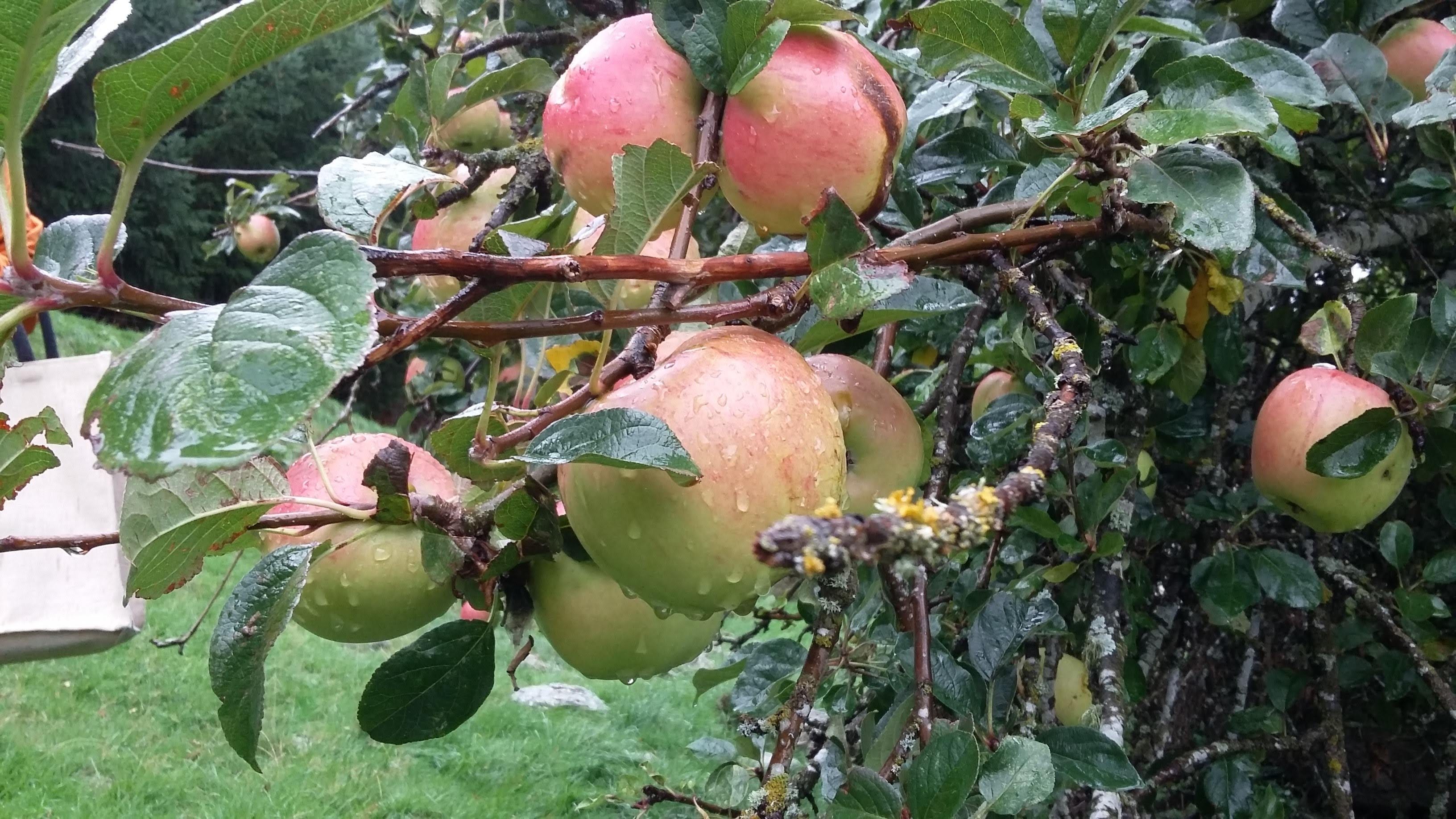
But it’s not just the isolation, nor even her age that makes our old girl special. It’s that she’s a heritage tree. Because she has grown from seed this tree is actually unique — the only one of her kind in the world. You can’t be more special than that.
And her apples are beautiful; cooking apples like your great-grandparents grew. Raw they are tart on your taste buds, but cooked they turn fluffy, sweet and delicious. You might find apples like these in a farmer’s market, but not on the supermarket shelves.
Our family loves this old apple tree, and when we climb up the gully each year at harvest time there’s a niggle of worry at the back of my mind.
“What if a fire raced unexpectedly down the dry gully? Would we lose her if disease struck? Even trees succumb eventually to old age...”
The world is losing its unique plants and animals at an alarming rate. I would hate for our old tree to join that list.
And yet, we may have worried, but year after year we stayed stuck in procrastination mode, until one day we met Riverton’s famous tree-saving duo.
Tree-Saviours Arrive On The Farm
Robert and Robyn Guyton are passionate permaculturalists and have developed their once-gorse-covered Riverton property into a food farm which supplies most of their daily needs. They are also the guiding lights behind the Riverton Environmental Centre and are well known in Southland for their conservation efforts and their enthusiasm about saving trees.
One windy, wet Sunday in early spring, Robert and Robyn decided to explore the old orchards around the Garston area. Our son Chris found them peering at some apple trees near the woolshed.
“These trees aren’t bad,” he told them, waving his hand around the nearby orchard, “but would you like to see the best tree on the farm?”
Of course they would. So he drove them up the gully to the quiet old tree.
So that’s how it came about that when Terry and I drove home from church that Sunday morning, we discovered Robert, Robyn and Chris all dripping wet and happily stowing cuttings into their car.
“What a find!”
Robyn Shields
One of the Guytons’ missions is to train other people up in the art of tree-saving. So they passed the cuttings onto Robyn Shields, a former student of theirs, who lives not far from Queenstown.
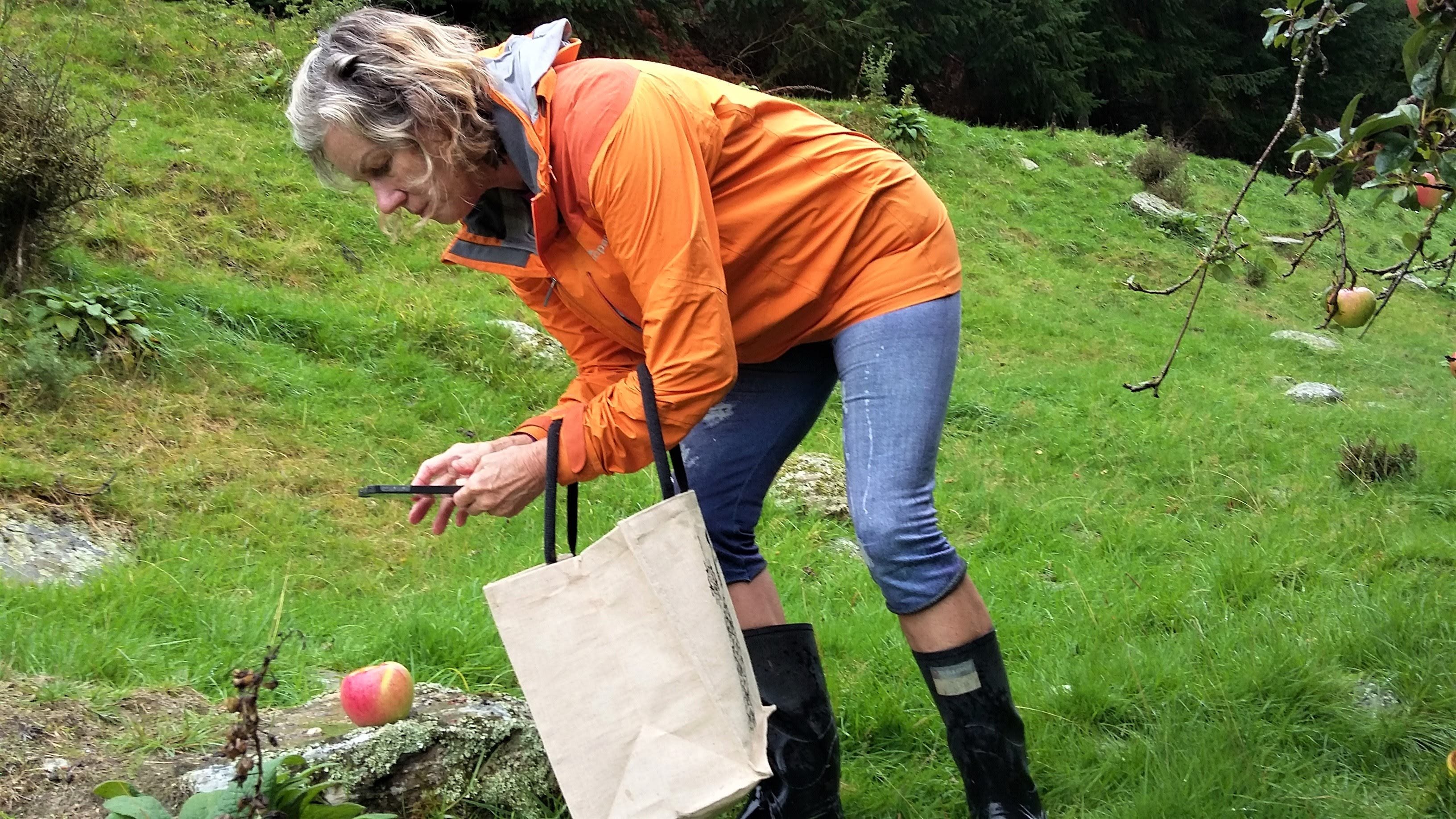
Robyn’s always loved old things so the idea of saving plants that might otherwise disappear for good immediately attracted her interest.
Naturally, she was keen to learn how to graft trees from the Guytons as part of their programme aimed at saving Southland heritage apple trees. In fact, the idea combined Robyn’s two favourite passions: gardening and antiques.
Not long ago the Shields were immersed in running a busy paua shell and souvenir business in Riverton but when they retired to Queenstown, Robyn ‘seized the day’ and set up a tree-saving haven in her backyard.
Grafting Baby Apple Trees
To get a true replica of an apple tree you need a cutting — or scion — from the new growth of your original tree, and a rootstock to graft it onto.
Rootstocks come from trees that are particularly hardy and disease-resistant. They’ll ensure that the new tree has well-developed roots and a good uptake of nutrients. The rootstock also determines the size of the new tree and you can find ones from dwarf all the way up to vigorous (which are likely to be huge.)
When the new growth has hardened up — usually in late winter — Robyn takes cuttings from the old tree, pops them in the fridge and ensures that she’s got enough rootstock growing in her nursery.
When spring arrives it’s time to graft the scion.
First, Robyn carefully makes a split in the top centre of the rootstock stem. The next step involves shaving the bottom of the scion into a wedge and inserting it into the split. She tapes the two together with a special tape which will wear off over time.
Our Baby Heritage Trees
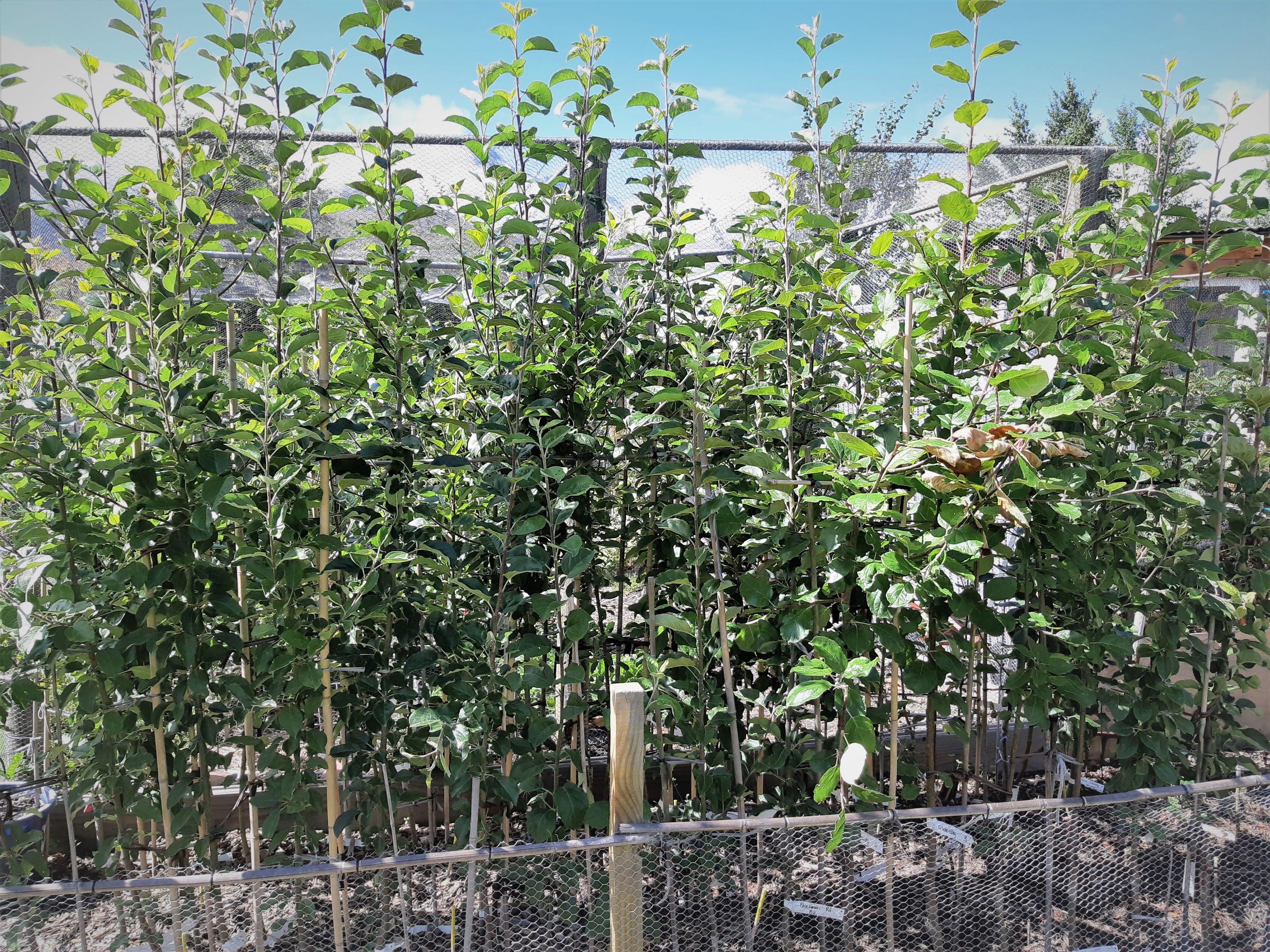
When visited Robyn in 2019 she showed me a group of splendid year-old saplings growing strong and straight from our original heritage tree.
Interestingly, she mentioned how hardy and resistant to insect damage the saplings were. The weather had been warm and wet that summer and Robyn’s garden was plagued with aphids, but there was not one to be found on our young apple trees.
I took a few saplings home and planted them around the farm.
It’s comforting to know that when our old tree finally gives up her heritage will live on.