

Summer is haymaking season on the farm and today I reflect on how making hay has changed over the years. We still use dried grass but our ancestors wouldn’t believe how we can make hay now.
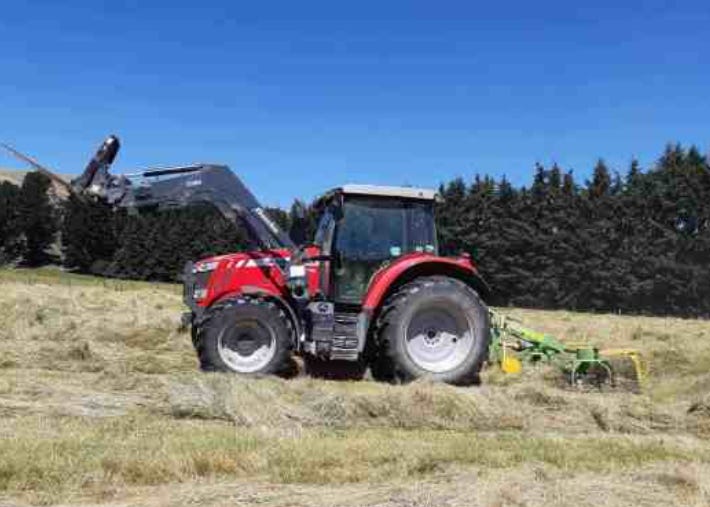
The Easy Way To Make Hay
At its simplest, hay is just dried grass stored for the winter. Cousin Matt — with just five sheep to feed — has haymaking down to a fine art.
At some point during the summer, when Terry or Chris are cutting a paddock of hay down that way, they’ll run the mower over the grass verges near Matt’s house.
A few days later when the long grass has dried Matt picks it up and dumps it into large sacks (called fadges). Now, that does take a while, cos Matt’s in his 80’s now.
Still, it’s a great way to keep the side of the road tidy and stock up for the winter at the same time.
But of course when you have 3000 mouths to feed the process becomes a bit more complicated.
Back In The Day
Once upon a time, skilled farm-hands would have cut a paddock of long grass with sickles — those wicked-looking long curved, super-sharp blades. Others would follow behind and hand-spread it to dry.
A few days later, they’d pitchfork the hay into huge piles called rucks.
It was slow going and very labour intensive. No wonder that farmers began to embrace the new technology of tractors and hay-makers when it began to surface.
There are a few vintage machinery clubs around Southland and it’s always interesting to go to their open days. We had one such demonstration here in Garston in 2019 and it was fascinating to think how this old stationery baler — so slow compared to our modern machines — must have been revolutionary when it first came out.
Graham Petersen demonstrating hay making using an early stationary baler at the Garston Vintage Machinery Day, February 2019.
Farmers would have towed a “sweeper” behind a horse to gather up piles of hay and dump it beside the baler. The strings are threaded between each bale with a giant metal needle, then tightened and tied by hand. Graham told me this process needed at least four people: one to fork the hay, one either side to tie the strings, and one to drive the horse.
And don’t forget there was also mum at home making the mountains of food needed to fuel so many workers.
Square Baling On The Move
By the time I came onto the farming scene in 1983, haymaking had become rather more sophisticated. One person could mow the grass with a tractor and mower, then turn it over with a tedder or a hay rake, and tie it up with a baler which moved with the tractor. (Nowadays we call these square bales, although of course, they’re not actually square at all.)
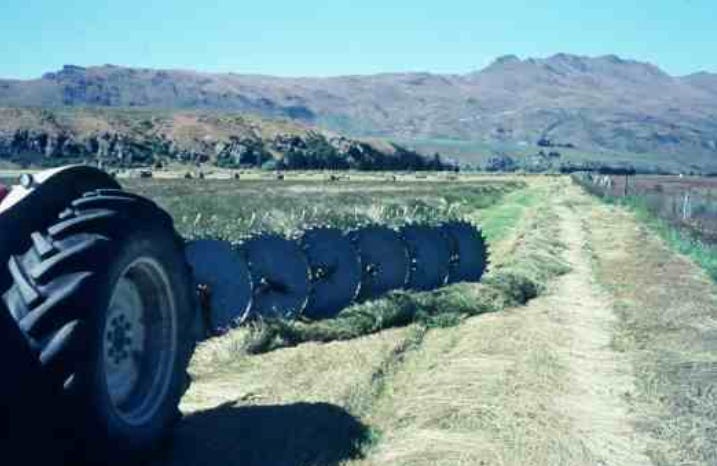
The baler pumped out the bales and dropped them straight onto the ground. Usually we towed a gatherer — kind of like a big metal frame on skids —behind which slid the bales along the paddock until there were enough to make a stook. Then the tractor driver pulled a rope attached to a gate at the back to leave the bales behind and closed the gate to start the next group.
My job was helping to build the stooks. No need for a gym membership in those days because freshly-made bales made great weights! And of course, since the finished stooks were always head-height, I needed an extra bit of oomph to heave the last bales on top.
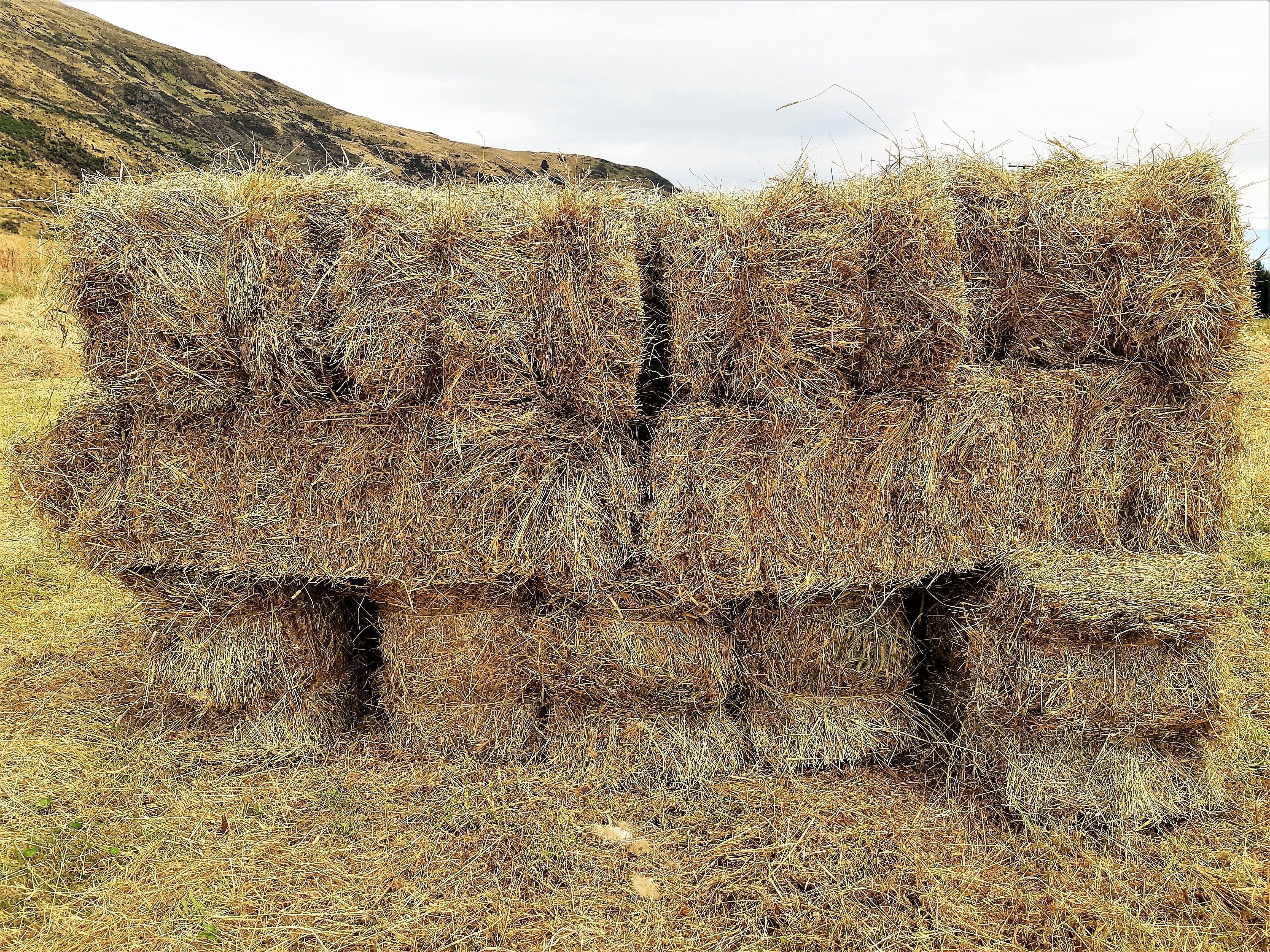
Introducing The Sledge aka “The Man-Killer”
Another way to build the stacks was on a sledge which towed along directly behind the baler. You stood on the sledge and picked up each heavy bale as it pumped out of the machine. Relentlessly, every 10 seconds, another bale to lift and stack. No wonder we groaned when the sledge came out.
Hamish and Peter Naylor making square bales and using a sledge. Horse owners and lifestyle farmers often prefer to use these small square bales because they can be picked up and moved by hand whereas round bales are so big and heavy you need a tractor to shift them.
Rain Covers
Most summers there’s at least one time when you’re racing to get the hay made before it rains.
So, back in the day Terry would come in and say “Get the hay covers, it’s going to rain.” (No cell phones in those days — he had to deliver the message in person.)
I’d drop everything and load the car up with the dusty covers piled in a corner of the workshop. (In later years I added kids and the latest baby as well.)
Nowadays, there’s not the same panic if it rains; the big modern round bales are reasonably waterproof. But the small bales would rot if they got wet so we had to protect them if we didn’t want to lose the lot.
Our covers were large canvas rectangles with hooks fastened on with rubber bands at the corners and side edges. (I remember repairing these by cutting the bands out of old tyre tubes, slipping them onto the hooks then looping them through the reinforced holes in the covers.)
There’s an art to covering a stack in the quickest time possible — and often we did have to be quick!
Working together, two people could put the cover on top of the stack, roll it out and hook it up to the sides of the hay bales in less than a minute. Then you dashed onto the next stack, and the next. It was actually pretty fun to race the rain.
This was a time-and-motion study in action and it all worked because of the way we had folded up the covers when we put them away the season before.
It was tempting to leave them all in a messy pile at the end of the season, but Terry would never allow that. Folding — and unfolding — those covers correctly was one of the first things I learned on the farm.
Sadly, I never got round to taking a photo of covered stooks., so that piece of our history is lost.


Keeping Up With The Times — Technology Moves On
But although haymaking had become easier and faster than those earlier times, we still needed a lot of hands on deck to make it happen. Nowadays, just as winter feeding out has become a one-man-band, our son, Chris, can make hay singlehanded.
Cutting the Hay
Modern mowers are huge, noisy and fast. Ours is by no means the latest model, but it can still turn a huge paddock into long, flat rows of mown grass in just a few hours.
Turning the Hay
If the weather-gods are kind and the sun shines bright, the grass will be ready to turn in a day or two. Often, the rows are so thick that the grass dries on top, but stays wet underneath. Then we have to turn them over (called tedding.).
Later, Terry or Chris might go round again with a “haybob” which fluffs up the hay and puts it into defined rows which are easy for the baler to pick up.
Ready to Bale
In a few days, the hay will be ready to bale, and that’s when the big round baler swings into action. (Of course just as the “square bales” aren’t really square, “round bales” are actually cylinders. Who knows how they came to be called round?)
So, around the paddock you go again. This time the baler chomps up the fluffy rows of grass and spits the hay bale out the back like a hen laying an egg.


Each bale is the equivalent of a whole stack of square bales and there’s no stacking or stooking to do. We usually leave them in the paddock to settle for a day or two, then use spikes or clamps attached to the tractor arms to pick them up and cart them off to the shed.
A Bountiful Summer
In Garston, we have to feed our stock in winter. There are months and months where the grass doesn’t grow, and our sheep depend on hay, balage and grain to survive.
And the weather in spring and summer is a crucial factor in the cycle of winter feed.
Some years we’re blessed with plenty of rain — but not so much that we’re drowning in it. There’s plenty of grass in the paddocks, and lots to spare for haymaking.
Other summers bring drought conditions and we’re lucky to get any paddocks shut up for hay. For example, on drought year Terry managed to shut two paddocks up for hay and one of them managed a measly 19 bales in total. The next year that same paddock yielded 19 big round bales in just two rounds.
What a difference!
Baling the Lucerne
Most farmers in this area have added lucerne (aka alfalfa) to their stock feed options. The bigger farms have paddocks and paddocks of the stuff. We have just one which gives us three cuts per year, in December, January and early March.
You can make lucerne into hay. It’s more nutritious than grass hay, and that’s what we did with it back in the ‘80s.
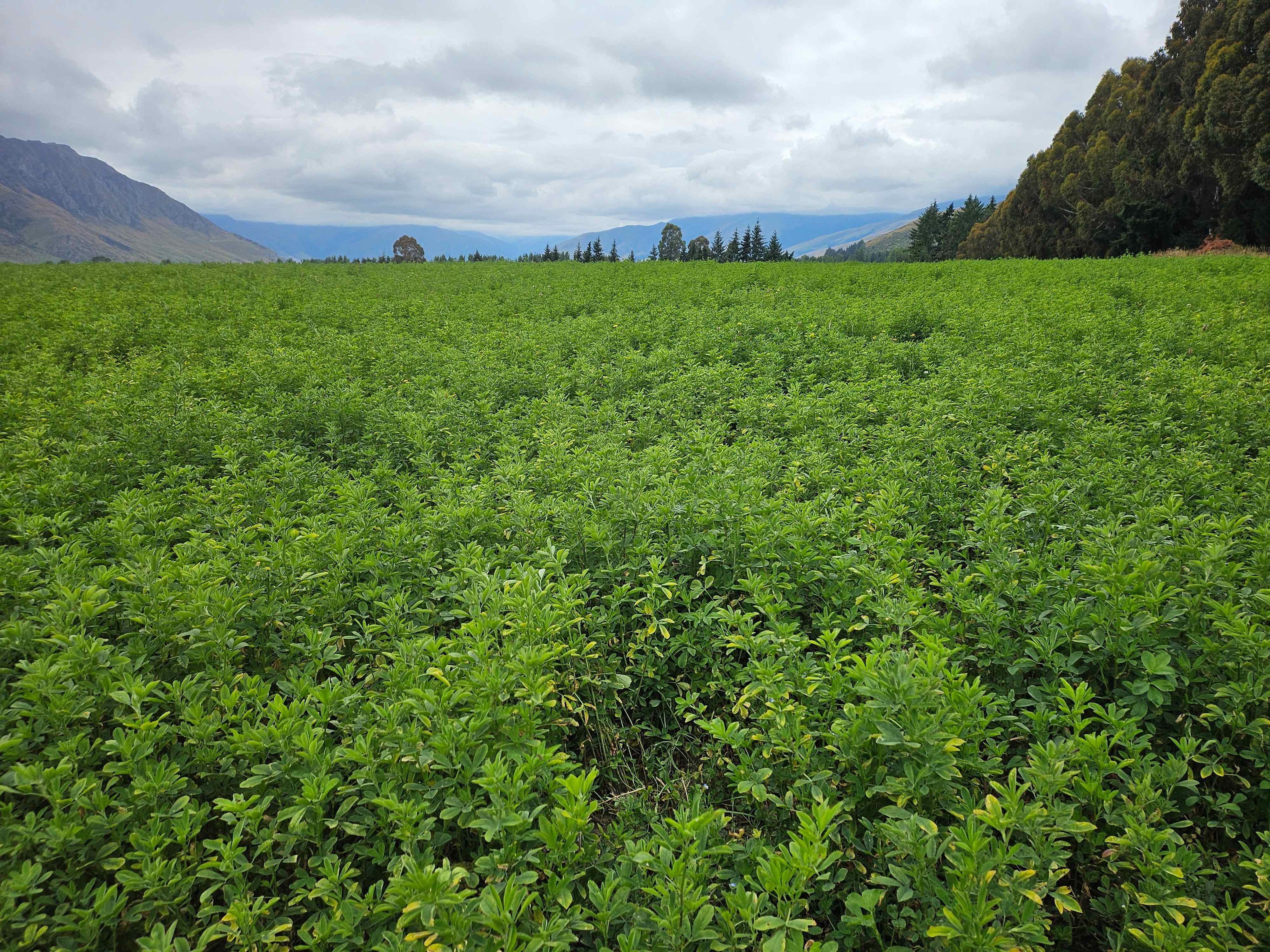
Nowadays we make balage, which ferments the lucerne, turning it into a sort of pickled mixture high in protein, calcium, magnesium and fibre.
You can pickle lucerne or grass in huge plastic-lined pits. That’s called silage, but it takes a lot more crop than we can produce.
Instead, we make balage by leaving the cut lucerne to wilt for a few hours, then bailing it as round bales and wrapping each bale firmly in plastic. Because no oxygen can get in, bacteria ferment the lucerne’s natural sugars over the next few months, producing a sweet, highly nutritious food perfect for feeding pregnant sheep during the later winter months.


Have you ever been near a big silage pit, or a batch of balage, when it’s first opened? I thought it smelled terrible when I first moved to the country. But I remember asking my father-in-law, Tommy, why the sheep liked eating it so much.
Tommy was good at explaining farming practices into concepts his townie daughter-in-law could understand.
He told me that for the sheep, the difference between balage and hay was like the difference between eating chocolate and cabbage.
I know which one I’d prefer — and luckily for the sheep, in this case the “chocolate” is even better for them 🤣.