

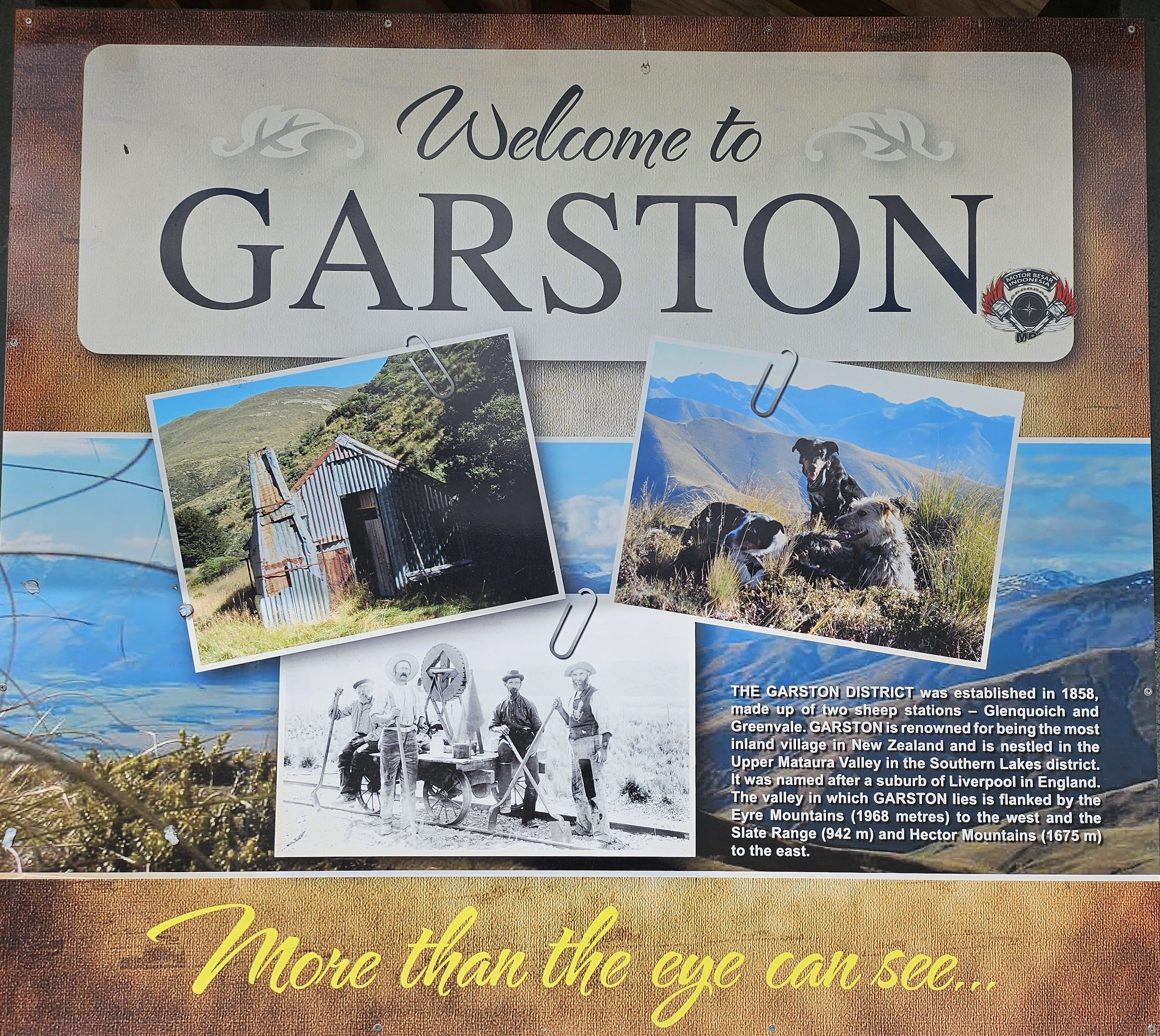
I’ve lived on a farm in Garston for more than 40 years, so that almost makes me a local. But my husband is truly Garston born and bred. His family were one of the first to settle in the valley when it was opened up to farmers in the 1870s and McNamees have been here ever since.
So for our family the ties to Garston run very deep, and we’d find it pretty difficult to leave.
But what is it that makes this quiet country village so hard to beat?
The View
Well, our location is hard to beat.
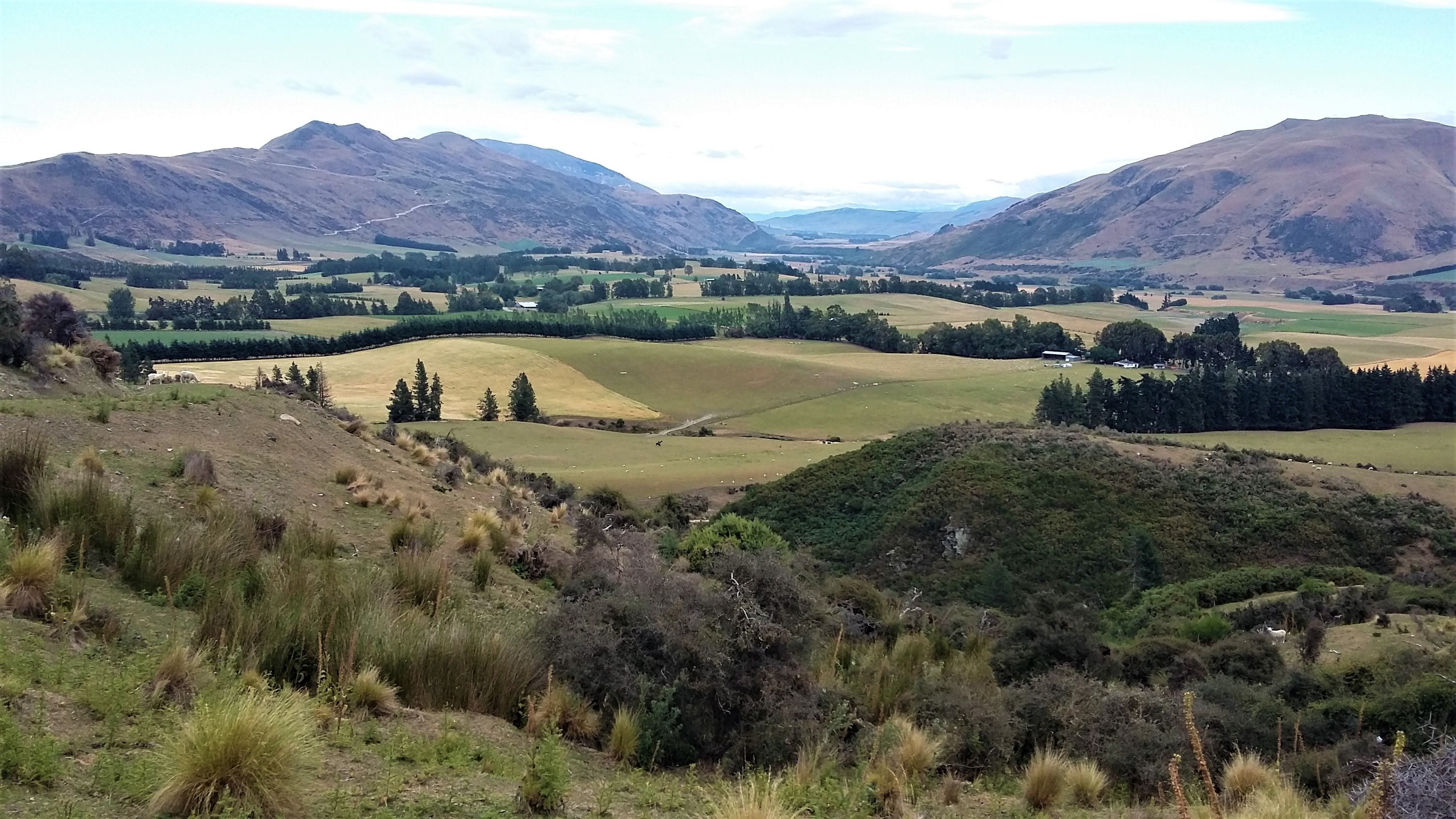
The village is set in the narrowest part of the Upper Mataura River Valley, and mountains range on either side, as far as the eye can see. Their beauty is different from the craggy splendour of Queenstown’s Remarkables range. Our’s are “working” mountains; home to animals — farmed and wild — rare bugs, mountain plants and above all, the golden tussocks which colour the landscape.
Above the village, hidden terraces slope in layers up to the foot of the mountains, and this is where our house can be found. When I step out of the back door there is not a soul to be seen. It’s just me, the birds and the sheep.
What a way to begin — or end — a day.
A Tough Start
When Europeans first arrived they farmed the Upper Mataura Valley as one giant sheep station. But later on the area was divided into 200 acre sections and these were balloted out to small farmers and settlers.
And that’s where the modern history of Garston begins. Our family came from the lean pickings of the gold claims in the Skippers Valley to try their luck at farming. Others made money killing rabbits — a lucrative enough trade in those days to enable them to save enough to buy into a farm. Some came from family farms further north or south.
Life was pretty tough in those early days. The valley had very few trees back then and firewood was in short supply. The winters were brutal. There’s a famous tale of one long ago winter when the deep snow lasted for so long that the settlers had to use their carefully-hoarded fence posts for firewood just to survive.
Money was scarce too. The kids walked to school from farms dotted around the countryside whether they had shoes or not. My father-in-law used to say:
“We never minded stepping in a cowpat on the way to school — at least it warmed our feet up.”
I still don’t know if he was joking or not.
Gold
There’s gold in them thar hills. Or at least there used to be.
Shortly after the settlers arrived gold was discovered in creeks and cracks all around, and life got busy as the gold miners flooded in. They came from all over the world to try their luck, set up camp for a while and livened up the area.
Eventually the gold became too difficult to find, and the miners drifted away to try their luck elsewhere. They left reminders of their stay, with a little cluster of Chinese miners’ graves in the cemetery, and the great water races which they dug high in the mountains to supply water for the great sluice guns in the Nokomai Valley just beyond Garston.
The Roaring Lion water race winds around the back of the mountains above our farm. When new, it stretched 47km from the Roaring Lion Creek to Nokomai valley. Nowadays, only a deep ditch remains and the Welcome Rock mountain bike trail runs alongside part of it.
There was another water race on our side of the mountain range, too. I can see the remains of it from my window as I write. I’m not sure if it ever functioned properly, though. The engineers began digging the race at both ends. Somehow, measurements must have gone awry, because the two ditches didn’t meet in the middle. Unfortunately, so the story goes, the side coming from the water source was much lower than the ditch to the Nokomai Valley.
Loving Reminders
John Newman
It’s easy to guess that Garston is proud of its history. One of the first things that stands out when you stop is the information booth, which was updated after much collaboration by local historians. And when you start to look around you’ll find caring memorials all over the Garston Green.
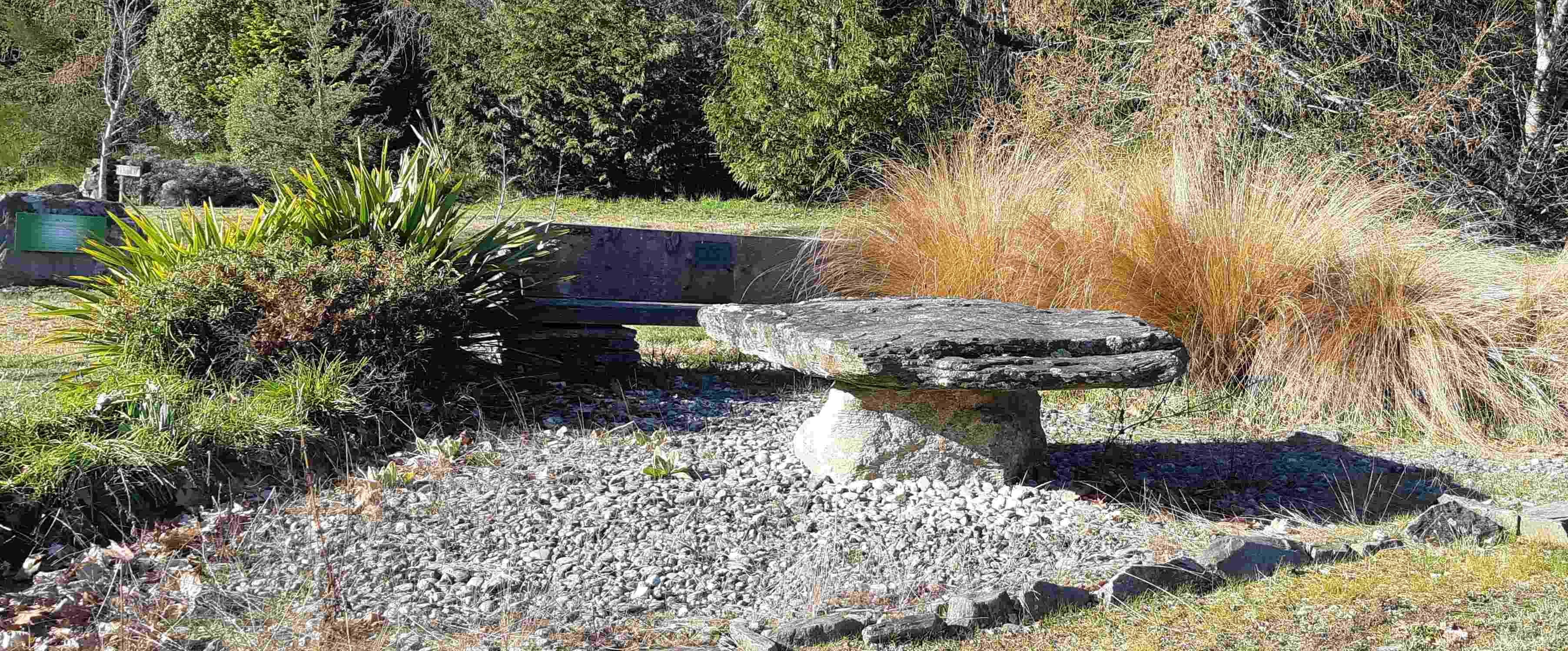
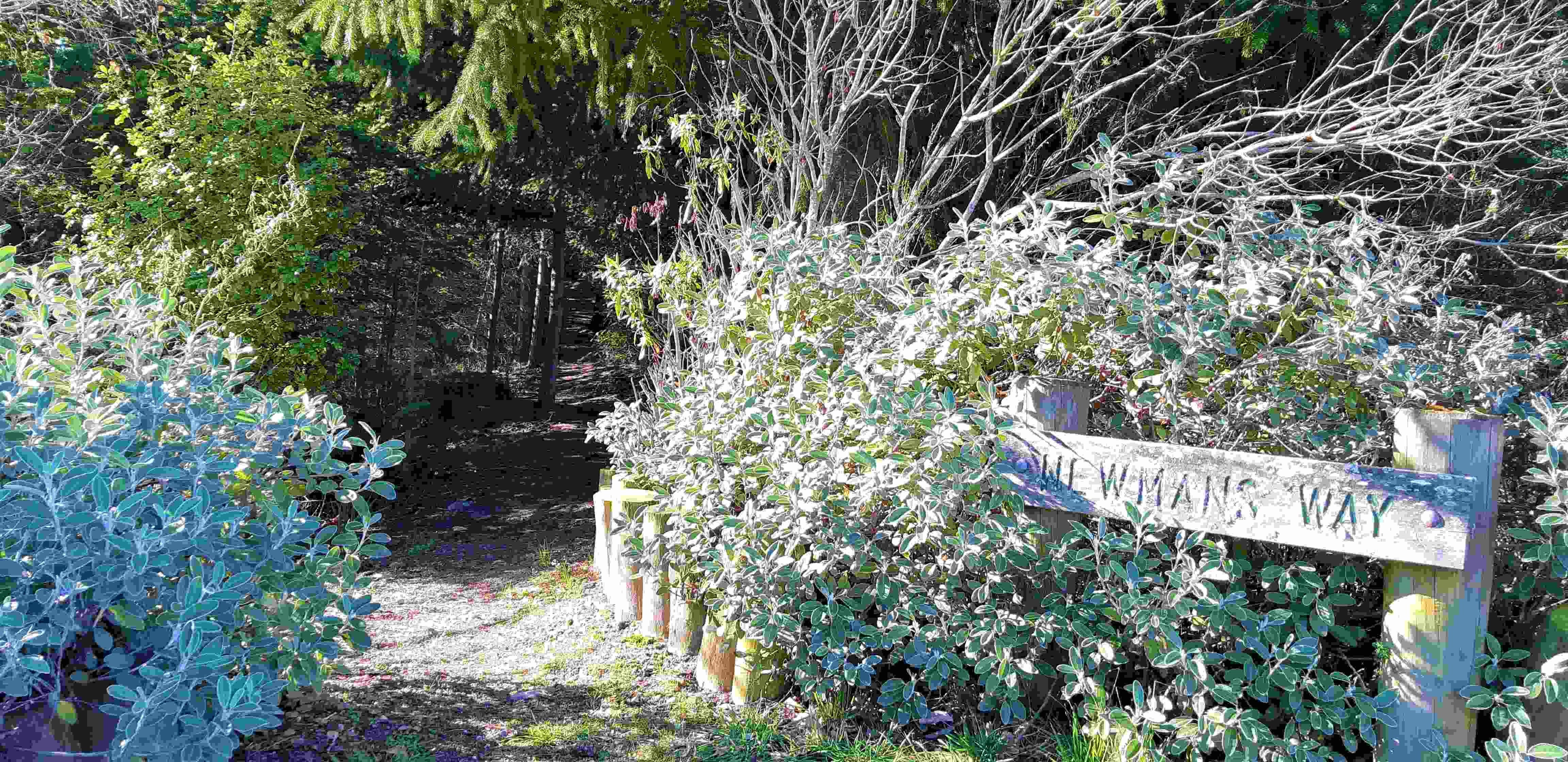
North of the shops is the picnic area dedicated to John Newman, a former owner of the Garston Hotel, who planted so many of the trees between Athol and Arrowtown. Take a stroll towards the tree-covered hillside nearby and you’ll find a gorgeous little walk called Newman’s Way which takes you up over the knoll to Garston School.
The Vital Rail Link
Further down the Green you’ll find tributes to the time when the trains ran through Garston, because when the railway from Invercargill to Kington opened in 1878 it was a huge boon to the area.
In those days before sealed roads, fast cars and huge articulated trucks, trains were the best and fastest way to travel the long distance between the “big smoke” of Invercargill in the South and Kingston — the gateway to Lake Wakatipu and Queenstown — in the North.
Farmers transported stock in and out of the valley by rail right up until the early 1970s.
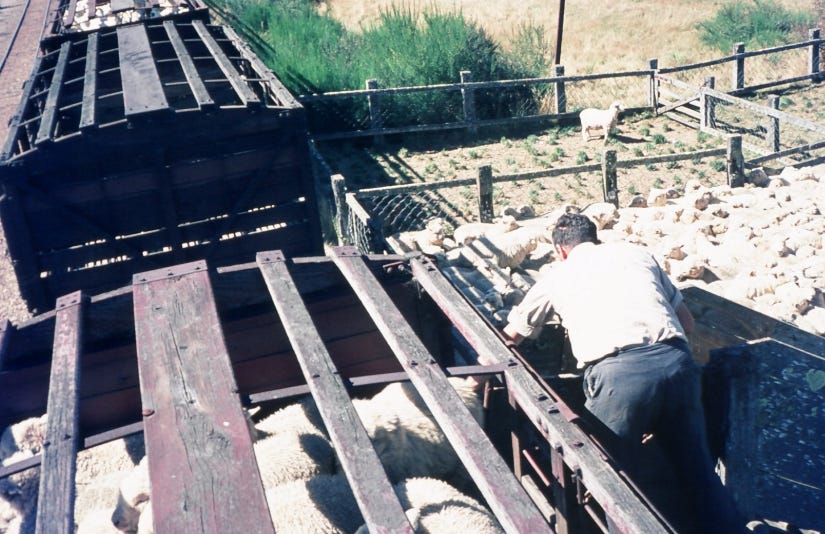
Loading sheep onto the train at Nokomai Siding, just South of Garston Village, 1968. Photo courtesy of Peter and Pam Naylor.
Even when trucks took over the job, the famous Kingston Flyer steam train ran through Garston as a tourist attraction until 1979, when floods damaged the railway tracks so badly that the whole line closed.
Garston doesn’t forget, though. On the Green you’ll find tracks, trucks and a display of antique jiggers. There, too, is a loving memorial to Russell Glendinning, a towering figure in local railway lore.
Peter Rabbit’s Village
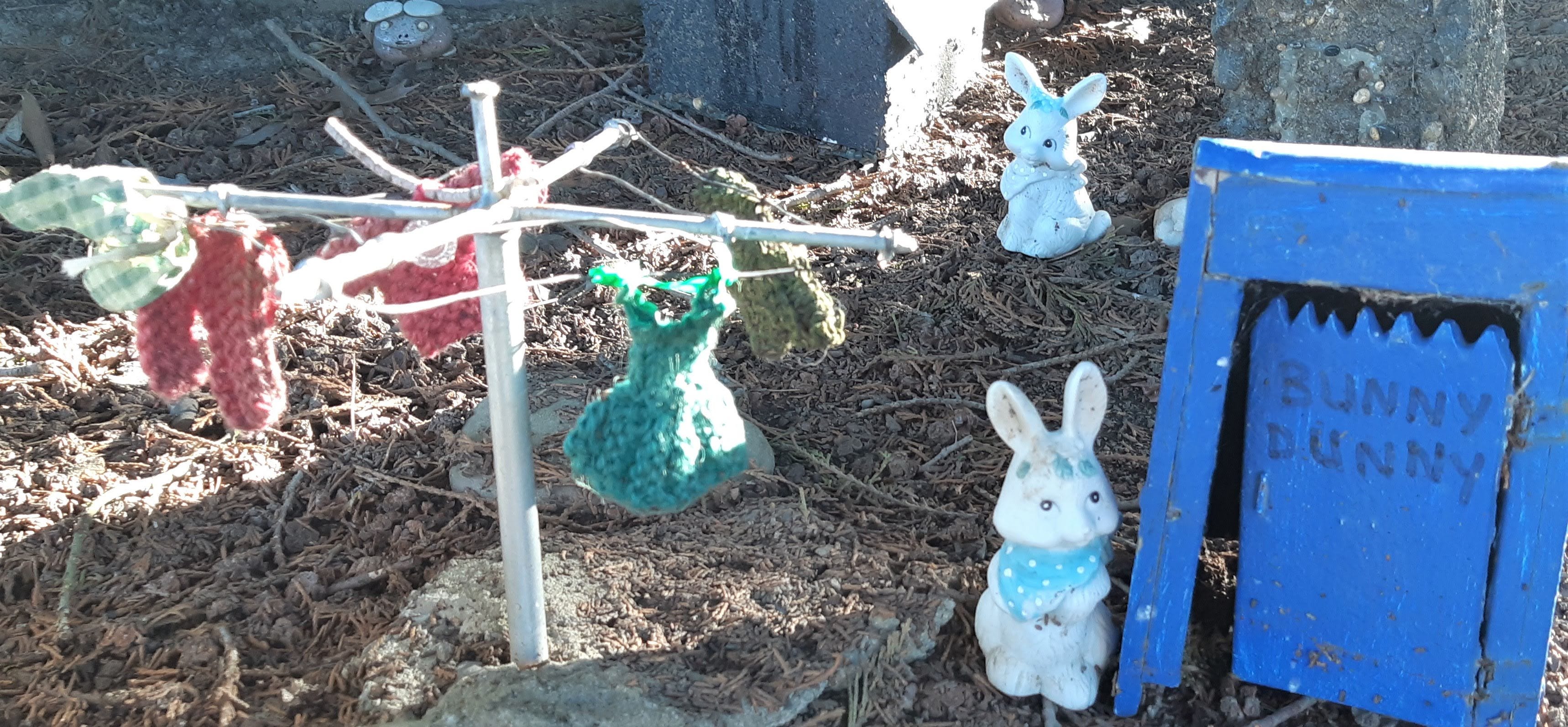
Peter Rabbit’s House has been a hidden part of Garston for a long time now. It’s a bit of a mystery; who did put out that little clothesline and Peter Rabbit sign next to the rabbit hole? Whoever it was, I hope they know how their whimsy brought smiles, and that gradually other secret “rabbit paraphernalia” appeared.
Someone added a diary, and visitors started leaving Peter little notes.
The House expanded in 2017, when the Garston School children decided that Peter needed company, and made a whole replica gold-mining era village.
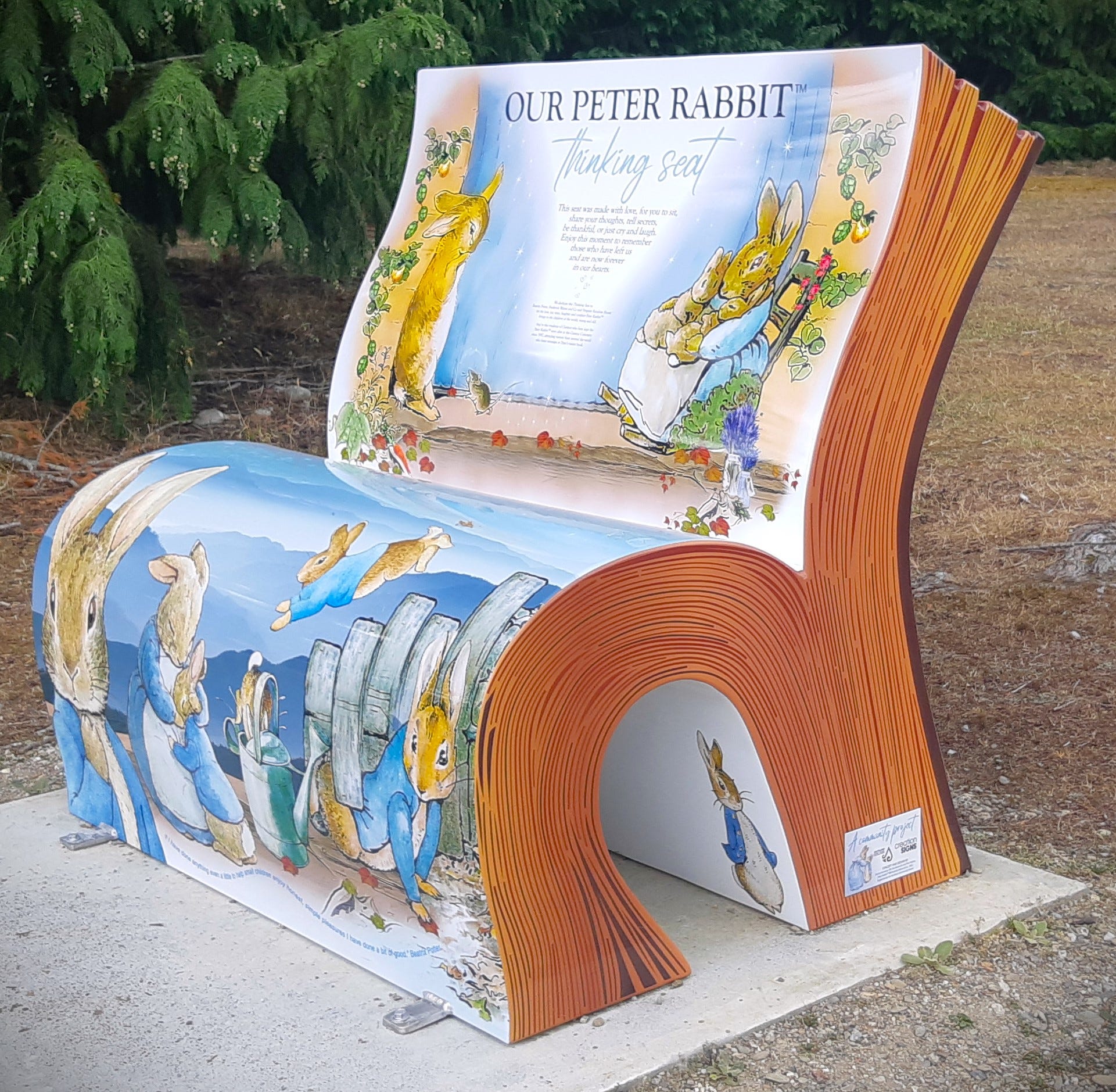
It’s not hard to find the rabbit village these days, because in 2022, it got a companion — a Beatrix Potter-inspired thinking seat designed by SDC graphic artist Donna Hawkins — right beside Peter’s tree.
The River
Winding through the valley, the Mataura River is world renowned for its trout. People come from all over the globe to try their luck in the cool, clear waters during fly fishing season. Some eat their catch, or mount it to sit proudly on a wall.
But others are simply there for the love of the fish and the sport. Those intrepid fishermen are found in the tricky “catch and release” sections of the river. Some of the fish there are huge — and wily — having been caught and released more than once over the years.
My favourite river memories are set in the 1990s. Baking summer days, at the stony beach under the old railway bridge where all the local mums and kids gathered to cool off.
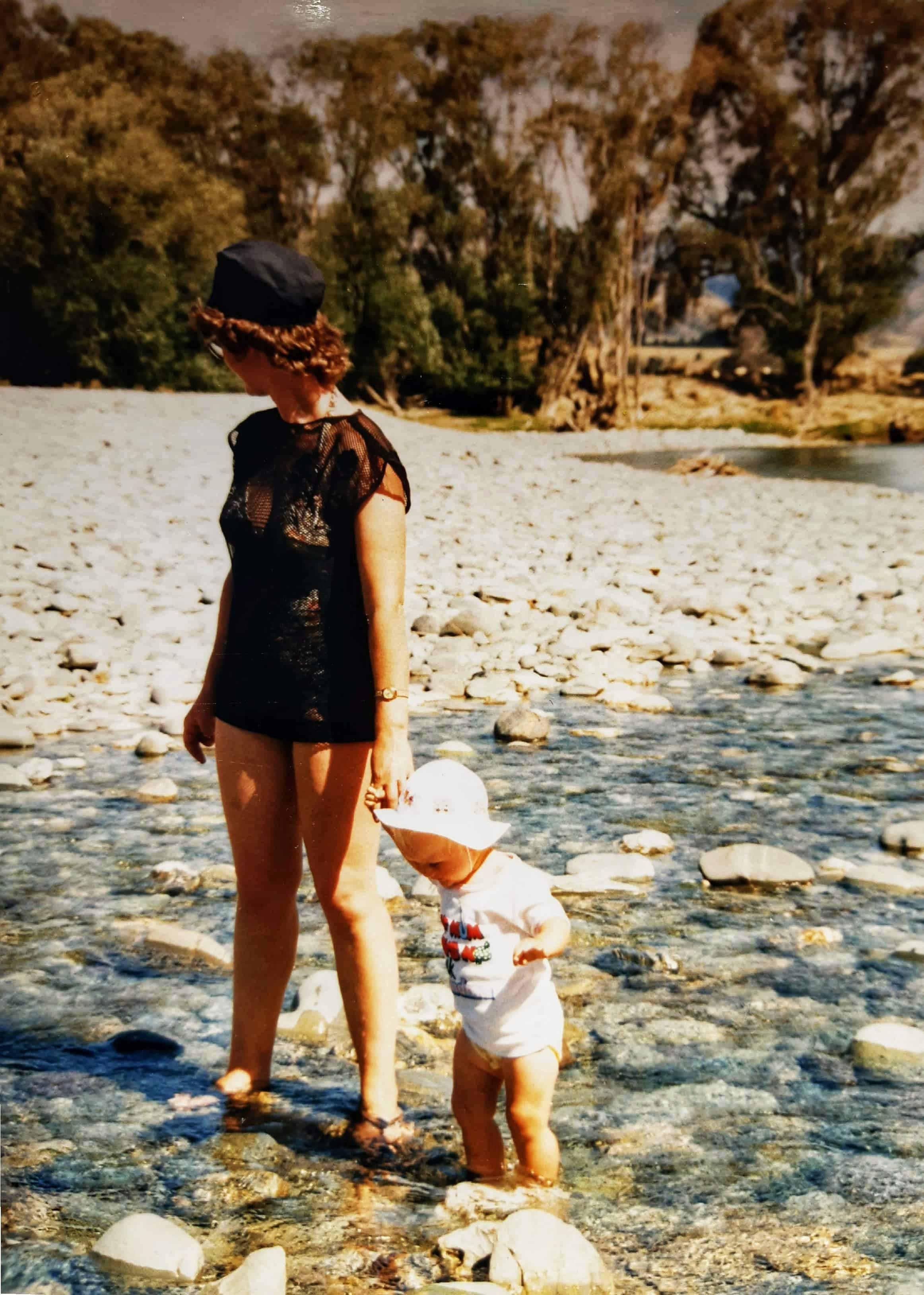
Steph and I at the river in 1987.
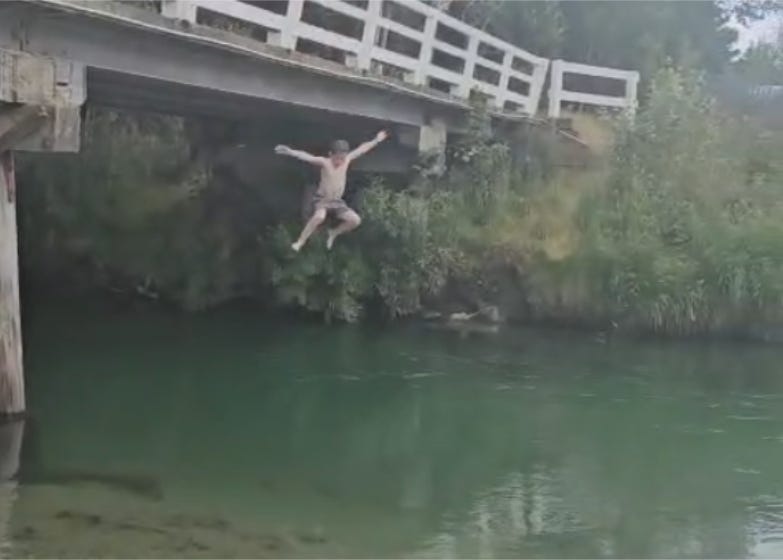
The children floated down the river on giant old inner-tubes from their dads’ tractors, jumped off the rocks and ate enormous afternoon teas. The bravest of them hung over the rail of the towering bridge above.
“Watch me! Watch me!” they’d yell and then leap down into the deepest pool below.
We still leap off the bridge today. Not me, of course. But it’s become a rite of passage — my kids, the Garston nephews, many of our workers have taken the plunge. And just the other day, my 8-year-old grandson took great delight in conquering his fears and proving that he, too, has what it takes.
Stretch Your Legs In Garston...
Nowadays Garston is moving on and looking outwards.
Travellers stream through on their way to the glories of Milford Sound or Queenstown and many stop at the Garston Green for a welcome break.
Kids race to recover from their long journeys on the playground. Adults discover the delights of The Coffee Bomb, and The Hunny Shop next door.


...Or Stay A While
But some opt for more than a quick stop.
Fishermen, bikers, hikers and those who just want a slice of rural peace and quiet, can find a bed at the former Garston Pub (now called The Garston) or at one of the local B&Bs.
There’s no denying that living in the country has its challenges. Farmers tend to work the daylight hours: short in winter, long in summer. And of course in the spring lambing and autumn harvest seasons, work can continue well after dark.
And almost every trip requires a car: there’s no public transport and we’re simply too far from everywhere to walk.
But despite that, Garston is a special place to be. Friendships run deep and beauty surrounds us every time we step out the door.
I am lucky to call this little slice of New Zealand home.